Journal Recommendations
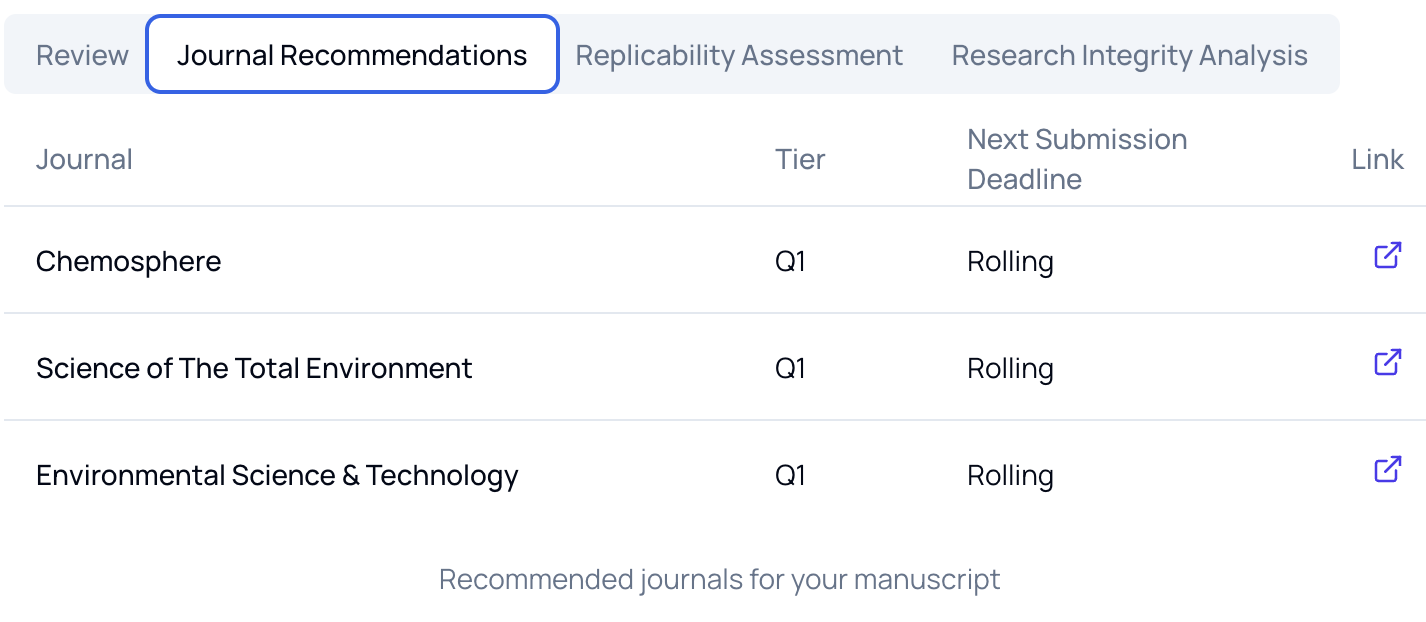
Stop playing journal roulette. ReviewerZero's Journal Recommendations feature analyzes your manuscript and suggests appropriate venues, helping you find journals where your work is most likely to succeed.
 Journal Recommendations
Why Journal Recommendations?
Choosing the right journal is challenging:
- Thousands of journals exist across disciplines
- Fit is crucial for acceptance
- Submission-rejection cycles waste months
- Authors often rely on limited personal knowledge
Our AI-powered recommendations help you identify journals that match your research's scope, methodology, and impact level.
How It Works
Content Analysis
The AI analyzes your manuscript to understand:
- Subject matter - Your research topic and discipline
- Methodology - The type of study and methods used
- Scope - Breadth and specificity of your contribution
- Keywords - Technical terms and concepts
Journal Matching
The system compares your manuscript against journal profiles:
- Scope alignment - How well your topic fits the journal's aims
- Methodological fit - Whether the journal publishes similar study types
- Citation patterns - Overlap with journals your references appear in
- Recent publications - Similarity to recently published articles
Ranking Factors
Recommendations consider:
| Factor | Description |
|---|---|
| Content Fit | How well your topic matches the journal's scope |
| Journal Standing | Scimago tier relative to your field |
Understanding Results
Recommendation Ranking
Recommendations are ranked by Scimago tier, so the venues with the strongest standing in your field surface first.
Journal Cards
Each recommended journal shows:
- Journal name - With link to homepage
- Scimago tier - The journal's standing in your field
- Submission deadline - When applicable
- Quick links - Direct access to submission guidelines
Journal Information
What We Provide
For each recommended journal:
- Scimago tier - The journal's standing in your field
- Journal homepage - Direct link to the venue
- Submission deadline - When applicable
- Submission guidelines link - Direct access to author guidelines
Data Sources
Recommendations are built from OpenAlex publication data and Scimago journal rankings, matched against your manuscript's content.
Best Practices
Preparing Your Manuscript
For better recommendations:
- Include a clear abstract summarizing your work
- Use field-appropriate keywords
- Ensure your reference list reflects the literature
- Complete your methods section
Interpreting Recommendations
- Consider multiple factors - Ranking isn't everything
- Check journal scope - Read their aims statement
- Review recent issues - See what they actually publish
- Consider your career - Impact matters differently at different stages
Making Your Decision
- Start with the top-ranked recommendations
- Verify each journal publishes similar work
- Check author guidelines carefully
- Consider timeline and cost factors
- Discuss options with co-authors and mentors
Common Questions
Why isn't my preferred journal listed?
Possible reasons:
- The journal may not be in our database
- It may rank below the display threshold
- Your manuscript may not match their scope well
How accurate are the recommendations?
Our recommendations are based on content analysis and journal profiles. They're meant to assist your decision, not replace your judgment. Always verify fit by reviewing the journal's actual publications.
Do recommendations guarantee acceptance?
No. Recommendations indicate topical fit, not guaranteed acceptance. Editorial decisions depend on many factors beyond scope match.
Limitations
What We Can't Assess
- Editorial preferences - Individual editor interests
- Current backlogs - Temporary capacity issues
- Political factors - Journal relationships or policies
- Your specific situation - Career needs, co-author preferences
Use Professional Judgment
Recommendations are a starting point. Consider:
- Your field's publication norms
- Advice from mentors and colleagues
- Your career goals
- Ethical publishing practices
Related Resources
- AI Review - Structured peer-review feedback
- Guideline Compliance - Meet journal requirements
- Journal Monitoring - Track journal integrity